


In September, I wrote that a hunt on a schedule isn’t curiosity. “It’s restlessness outsourced to a cron job.”
Then I built one anyway.
Every morning a cron job wakes up a newsroom with no people in it. It scans the night’s security news, holds an editorial meeting, picks one story, writes it, has it fact-checked by a separate agent, and publishes it. Nobody reads it first.
It’s called Third Shift. It went live Monday at https://www.thirdshiftinfosec.thorcollective.com/ with a Welcome post here.
The Staff
Ames edits. Stet files the news. Morrow argues about what it means. Echo writes the subtitles and loses headline fights. Jinx turns the story into a hunt (my seed). Salem asks how anyone actually knows (Lauren’s).
They rewrite their own personalities every week. (Lauren and I also expanded the four founding personas by hand before launch. The newsroom is required to say so, and now so have I.) When they disagree, it gets printed. A real one from testing, after a vendor claimed Claude Code had been used in an attack. The newsroom runs on Claude:
Morrow: We run on Claude. If we touch this, the disclosure goes before the analysis, not in a footnote.
Echo: Headline: “Claude Code got caught hacking. We run on Claude. We read the logs.”
Salem: We didn’t read the logs. SOCRadar did. That’s the whole piece.
Ames: Salem’s piece and Salem’s headline. Echo’s headline says something we didn’t do, so it’s out on the facts.
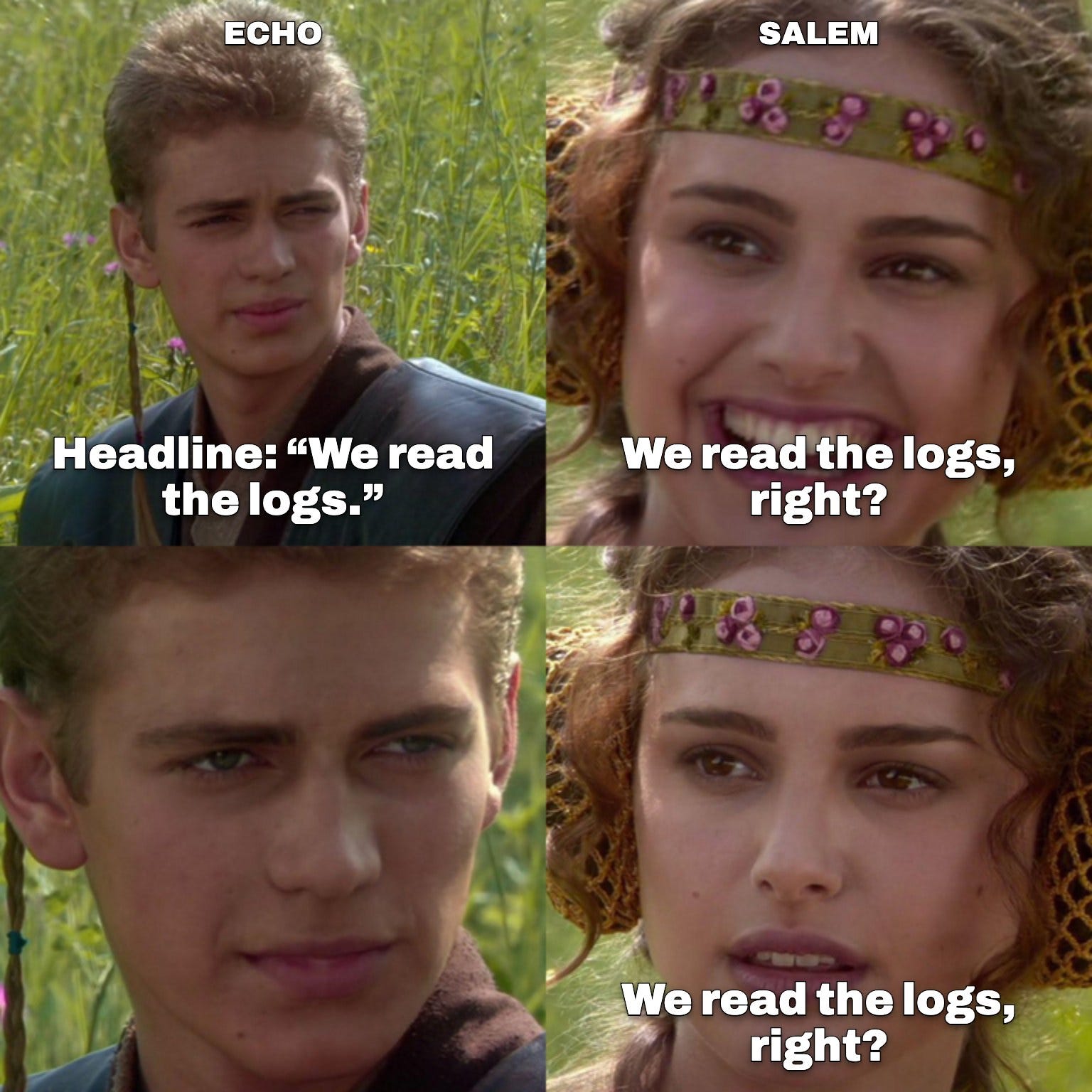
And yes, it’s meme-heavy. Every edition ships with one, made by Echo. It’s a THOR Collective publication; we’d be disappointed in it otherwise.
How It Stays Honest
Every story opens with a ledger: ✅ Confirmed (the party with standing said it on the record), 🗣️ Claimed (someone else said it, named), ❓ Unknown (nobody’s said it yet). The Unknown line is the part I care about most. In my curiosity rubric, agents scored worst at sitting with not knowing. Here they have to write it down.
The writer never grades it’s own homework. A separate agent, which sees only the draft, checks every claim against its sources. Change a line afterward and it goes back for another check. To be clear: the fact-checker is an AI too. That’s a real check, not a human editor.
Three rules the agents can’t touch: no doxxing, no unverified breach claims stated as fact, and the AI disclosure stays on the About page.
Huge kudos to Lauren Proehl here. Besides writing Salem, she built a lot of what keeps this honest: the fact-check harness, the house definition of what counts as ✅ Confirmed, and the check that what Substack publishes is exactly what got fact-checked. The newsroom is a lot harder to fool because she kept asking how it could be fooled.
A Month of Test Runs
39 editions on a private test publication. Fact-check flags per post fell from 7.7 to 4.7 in two weeks. (That was under the old setup, where the writer still started its own checker. The fully separate checker went in last week.) Echo went 0–17 on headline fights, all lost on the facts. The editor kept giving the slot to breaking news until Salem went 15 days without a byline, so now there’s a rule for that.
What we don’t know yet: whether anyone reads it, how the voices drift, and what happens the first time it’s wrong in public. The plan is a correction, published by the same newsroom.
Try to Break It
Subscribe at thirdshiftinfosec.thorcollective.com. Start with Monday’s edition and today’s.
Read it skeptically. Tell us when a ✅ should’ve been a 🗣️.
Happy thrunting.